
What does a Louisville snakeskin look like? Where is it found?
Snakes can contribute a great deal to the population control of other Louisville animals in your farm or garden since they hunt animals like moles, rats, mice, and sometimes even insects. The snake is among the few animals that groom themselves by shedding the outer skin. This cleanses them from parasites and allows new growth. When you are out in your garden, you are likely to find a snakeskin at some point.
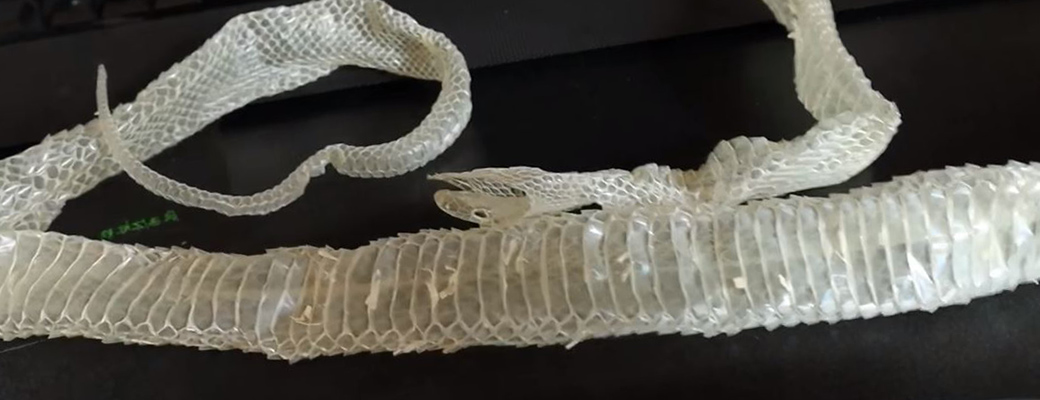
The skin that is left behind by the Kentucky snake is known as the shed. The snake will shed the skin many times in one year, and this is a way to show that it has outgrown its clothing or is just cleaning its house.
The type of Louisville snake and its health and age will determine the number of times the snake will shed in one year, so you may not know exactly how many times a snake will shed. In the best situation, the skin covering the entire body of the snake will come off in just one continuous piece. Even if the shed may be fragile and dry at the time you see it, this is not always the case. The snake will first exude lymphatic fluid in order to moisten the skin and then release it.
The Kentucky snake will not shed at the places where they normally spend time. They will need to get something strong that they can rub themselves against to make the skin come off. In this situation, they are vulnerable and they can strike easily. The eyes will be covered by a thick membrane in order to protect them, which means that they will not be seeing well and they are more jumpy.
When you find a shed skin, it can give you a clue about the type of Louisville snake in your garden and the reason why it was there. If it is a gopher snake, then you probably have gophers around, and if it is a rat snake, you likely have rats around. The green snake is looking for grasshoppers.
If you want to know how to identify the Kentucky snake by their shed, you should take time to learn more about this. You can get information online about the shed patterns and the type of snake that leaves them behind.
If you want to know if you have a pit viper or a non-venomous Louisville snake, then you have to check if the anal plate has been divided or not. An anal plate is found at the last belly scale on the base of the cloaca. This is where mating, defecating and giving birth takes place. The non-venomous snake features a divided anal plate. The cottonmouths, copperheads and rattlesnakes have just one single row of scales on the bottom of the tails.
Visit our Louisville animal removal home page to learn more about us.
© 2018 Louisville Wildlife - Wild Animal Removal Services
